
Is your AI agent stack a ticking security time bomb?
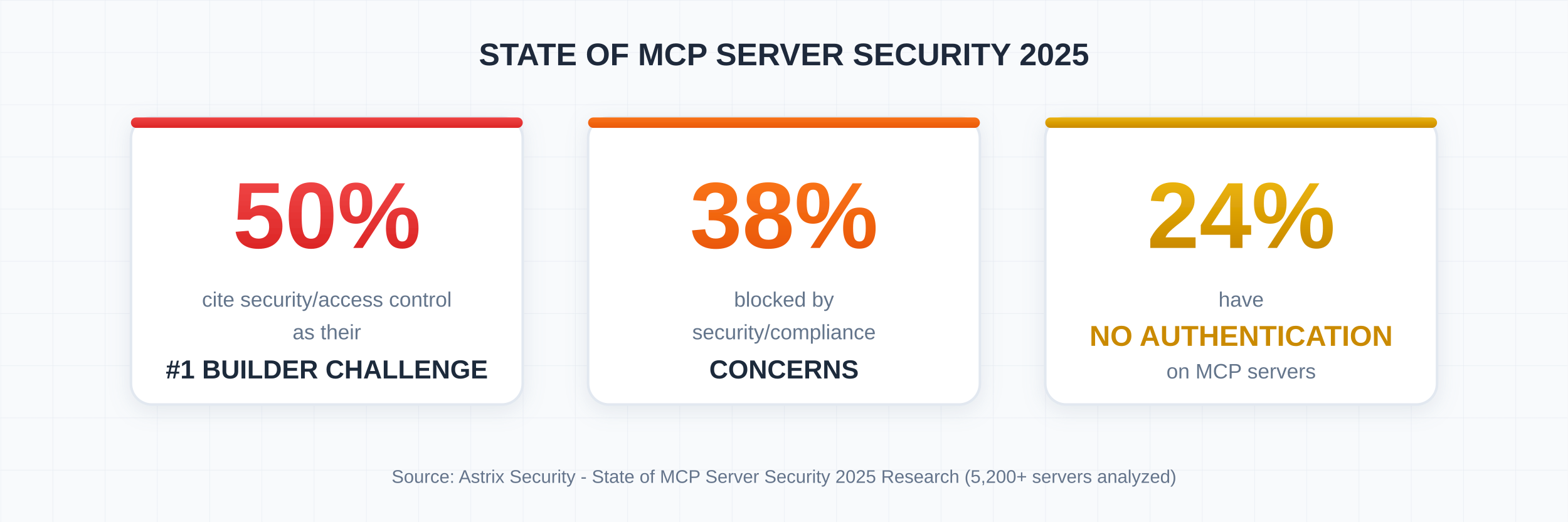
A recent State of MCP Server Security 2025 report analyzed over 5,200 Model Context Protocol servers—and the findings should alarm every enterprise building with AI agents. Half of all MCP builders cite security as their top challenge. Yet the majority continue deploying servers with dangerous credential practices.
What's Really Happening with Credentials
The research reveals dangerous patterns in how MCP servers handle authentication:
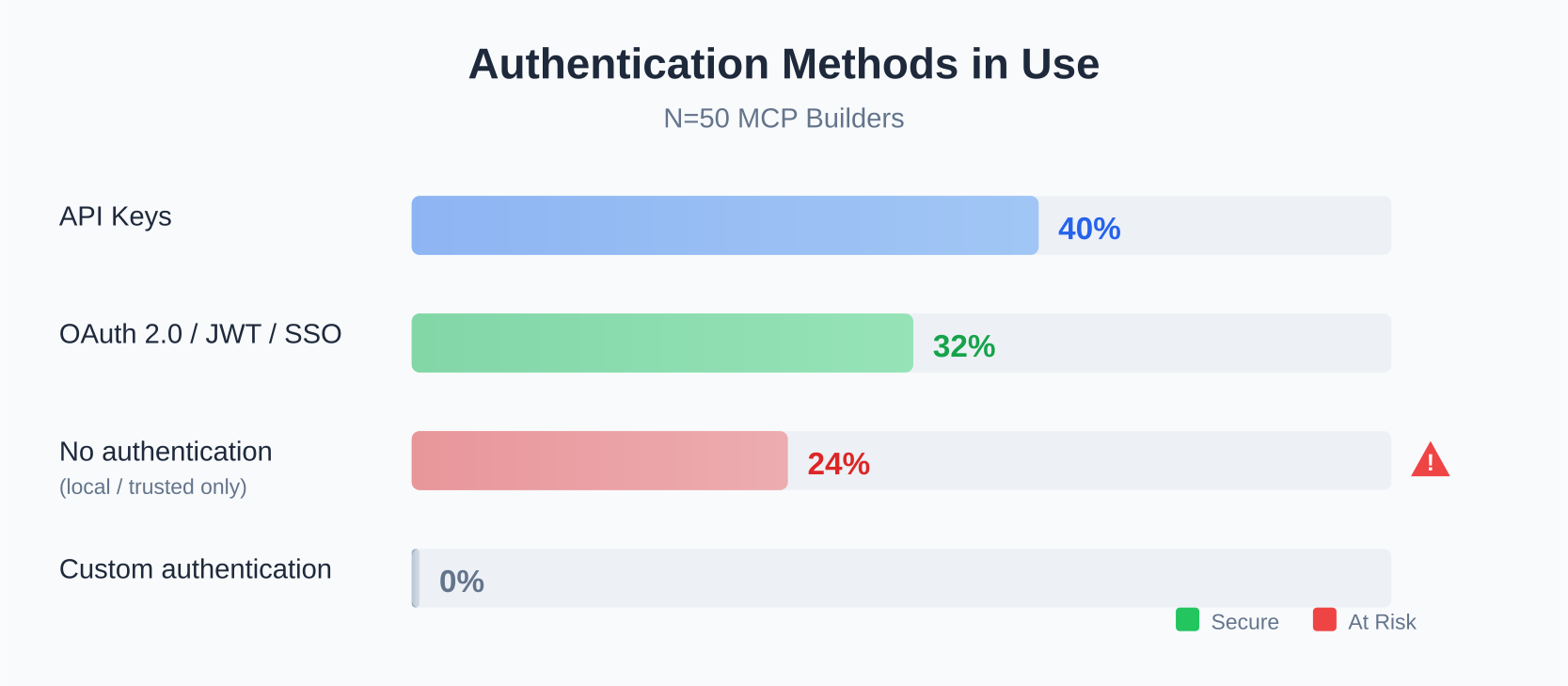
- 40% rely on API keys (static, long-lived, rarely rotated)
- 32% use OAuth 2.0/JWT/SSO (the secure approach)
- 24% have no authentication whatsoever
- 0% use custom authentication schemes
The Biggest Challenges MCP Builders Face
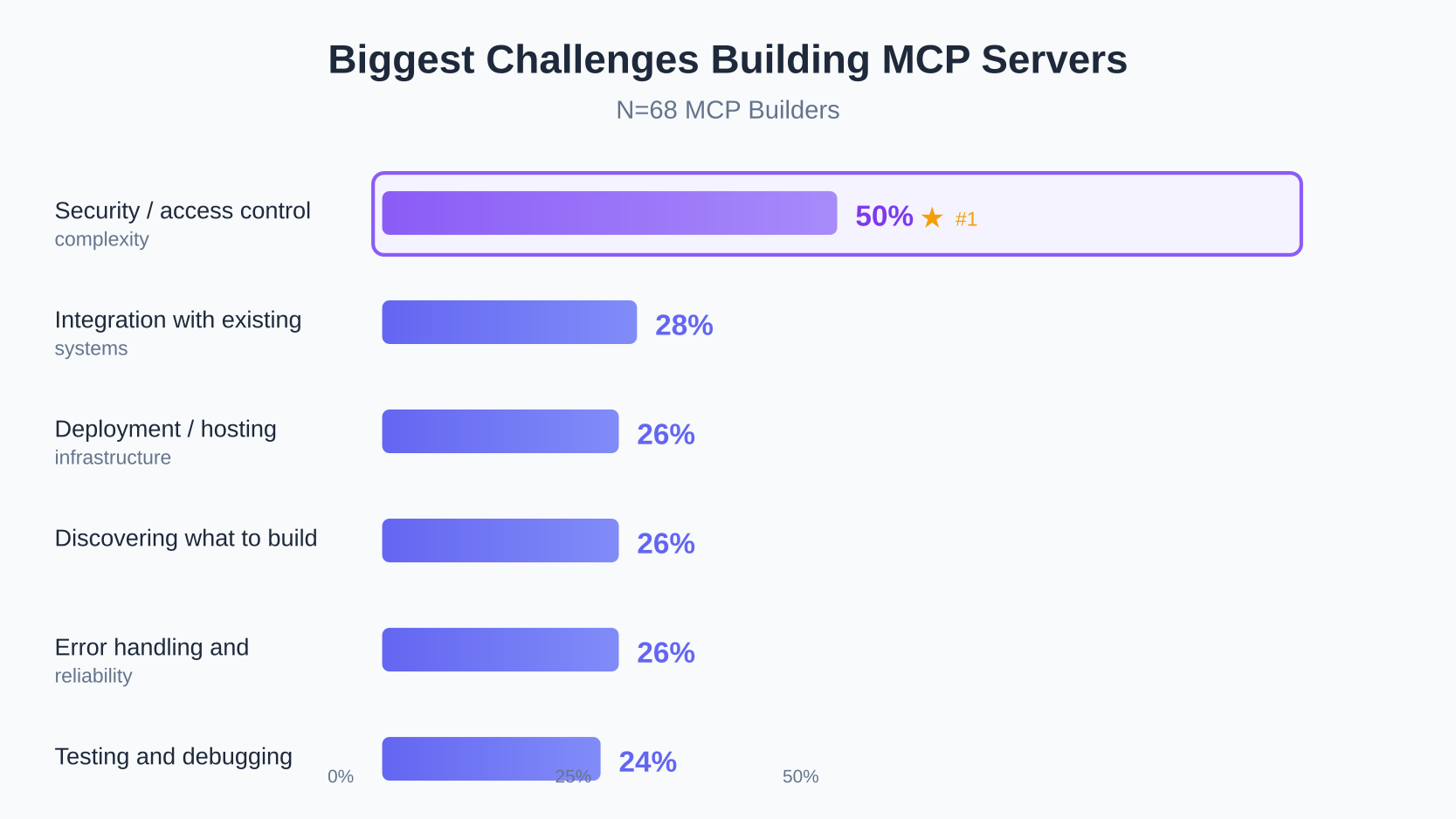
Security dominates the list—50% of builders struggle with access control complexity. Integration (28%) and deployment (26%) follow, but security remains the #1 blocker.
What's Preventing Wider MCP Adoption?
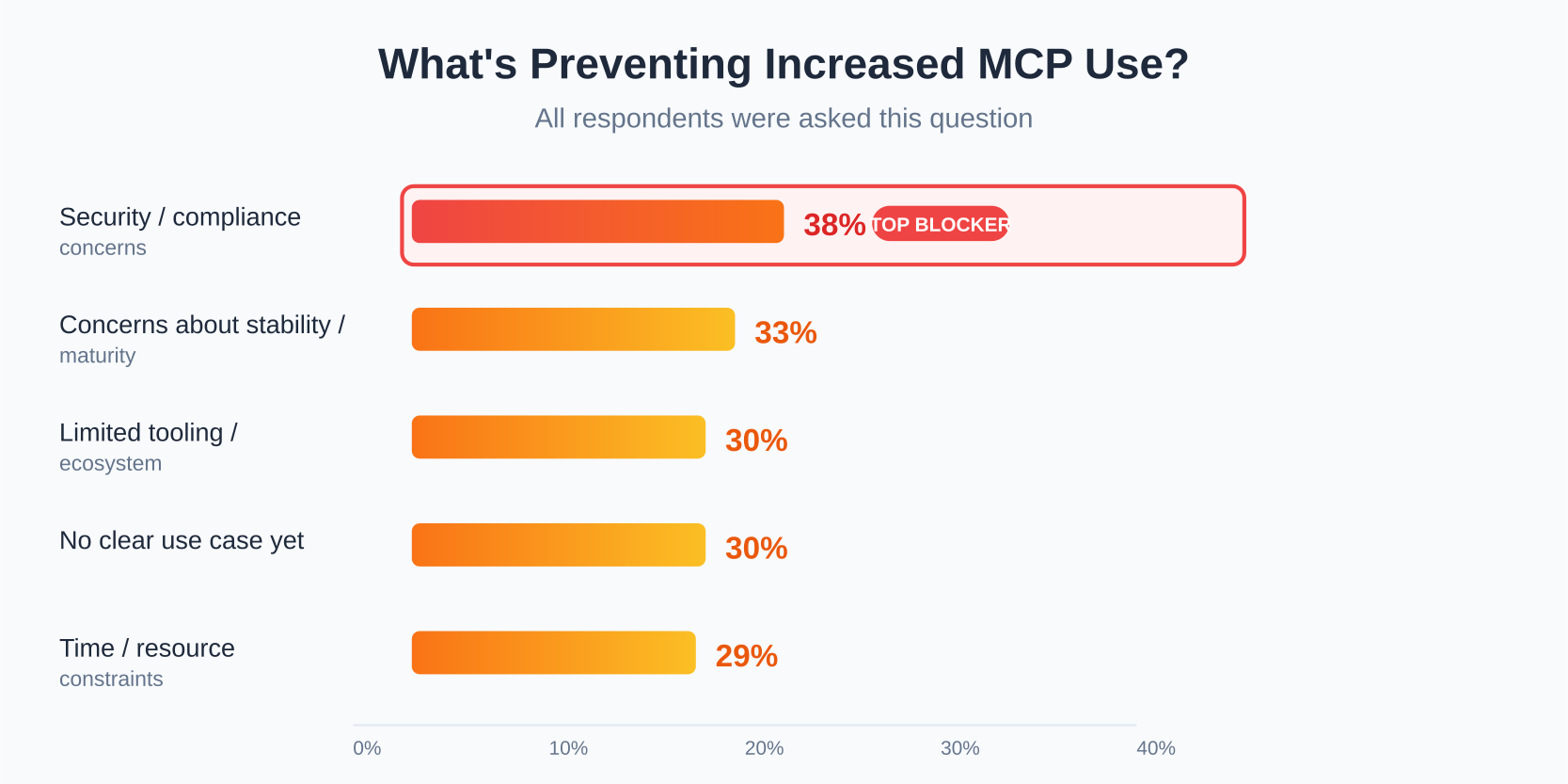
38% cite security/compliance as the primary barrier. This isn't a tooling problem or a use-case problem—it's a trust problem.
What happens when credentials leak? Attackers gain persistent access to your databases, file systems, and internal APIs. The blast radius extends to every system your MCP server touches.
Why Is MCP Security So Hard?
Building secure MCP infrastructure isn't straightforward:
Multi-tenant complexity: Enterprise deployments need isolation between teams, environments, and customers—but MCP's original specification offered no guidance here.
Credential sprawl: Each MCP server needs its own secrets for downstream services. Multiply this across dozens of servers, and you're managing hundreds of credentials.
No standardization: Without protocol-level auth standards, every implementation reinvents security differently (or not at all).
IAM integration gaps: Connecting MCP to existing identity providers like Okta, Azure AD, or Keycloak requires custom engineering.
MCP Security Best Practices
Based on the research findings, here's what enterprises should prioritize:
1. Never Deploy Without Authentication
The 24% running without auth are one misconfiguration away from a breach. At minimum, implement API key authentication with:
- Automatic expiration
- Rate limiting per key
- IP allowlisting
2. Move Beyond Static API Keys
Static keys are better than nothing, but they're not enough for enterprise use. Consider:
- Short-lived tokens with automatic rotation
- OAuth 2.0 flows for user-context operations
- Integration with your existing identity provider
3. Implement Granular Access Control
All-or-nothing access is a recipe for over-permissioning. You need:
- Route-level permissions (allow reads, block admin operations)
- Service-level restrictions (which downstream services can be accessed)
- Time-based controls (business hours only, maintenance windows)
- IP-based filtering (office networks, VPNs, trusted partners)
4. Isolate Environments Completely
Production credentials should never touch staging or development. Ensure:
- Separate credential sets per environment
- No cross-environment API key reuse
- Independent audit trails
5. Build Audit Trails From Day One
You can't secure what you can't see. Log every:
- Authentication attempt (success and failure)
- Resource access pattern
- Permission change
How FlowGenX Simplifies MCP Security
At FlowGenX, we've built our MCP platform with these security challenges in mind. Instead of leaving security as an afterthought, we've embedded it at the infrastructure layer.
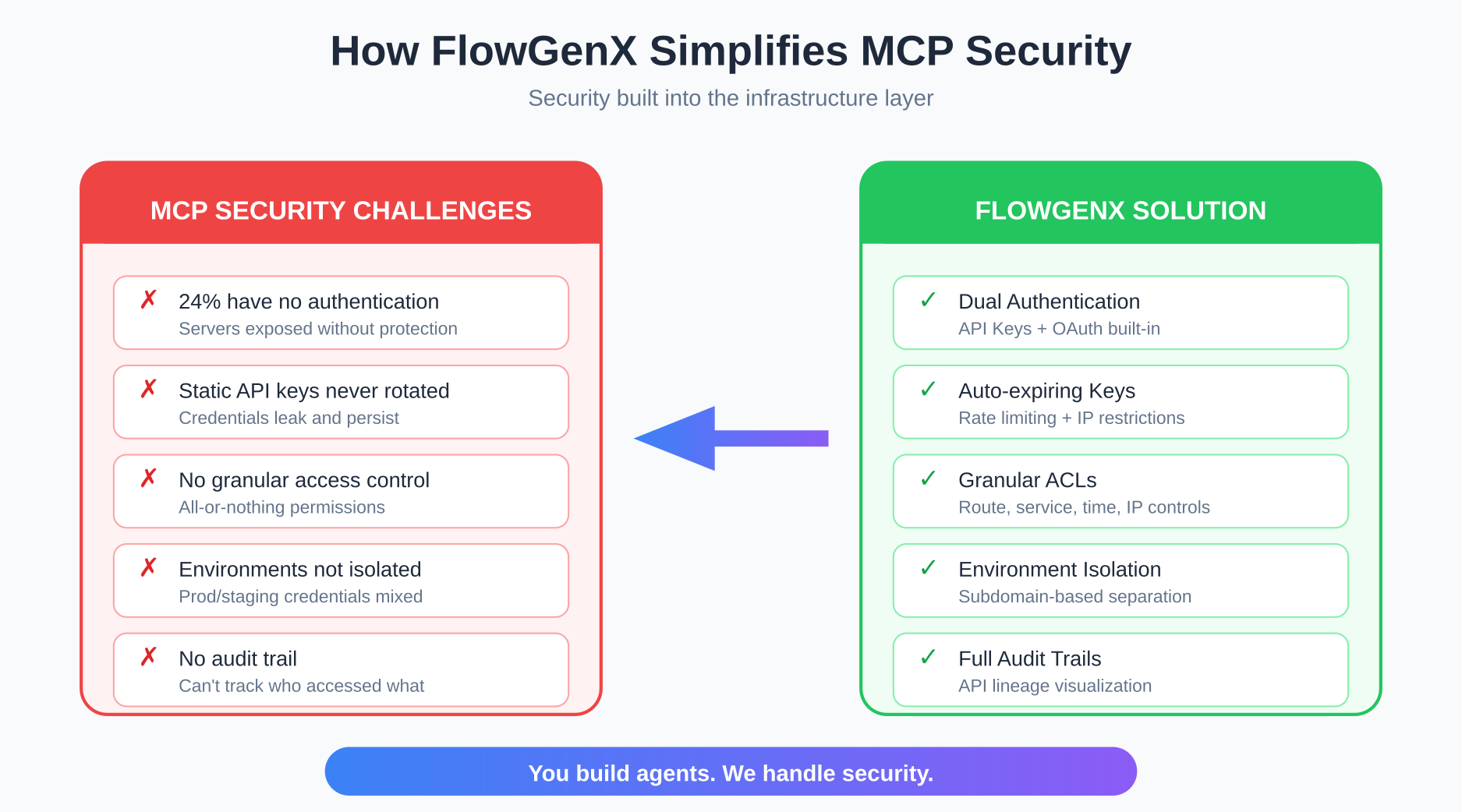
- Dual authentication (API Keys + OAuth) built-in from the start
- Granular ACLs covering routes, services, time windows, and IP ranges
- Environment isolation with subdomain-based tenant separation
- Full audit trails with API lineage visualization
- Zero-config security defaults so you're protected out of the box
The result? You focus on building agents. We handle the security plumbing.
Learn more: FlowGenX Agent Gateway Documentation
What's Your MCP Security Posture?
Ask yourself:
- Can you revoke a compromised API key in under 60 seconds?
- Do you know which consumers accessed which routes last week?
- Are your staging credentials isolated from production?
- Would you pass a SOC 2 audit today?
If any answer is "no" or "I'm not sure," your MCP infrastructure needs attention.
The Bottom Line
The gap between typical MCP deployments and enterprise security requirements isn't closing—it's widening as adoption accelerates. With 24% of servers running without any authentication and 50% of builders struggling with security complexity, the industry has work to do.
Whether you build security in-house or leverage a platform like FlowGenX, the key is to stop treating MCP security as optional. The research is clear: security is the #1 barrier to MCP adoption. Solve it, and you unlock the full potential of agentic AI.
Take the Next Step
Ready to see FlowGenX in action? via URL: https://www.flowgenx.ai/request-demo OR By clicking "Request Demo" Button on top of this page and discover how our intelligent automation platform can help your team cut response times, boost ROI, and deliver next-level customer experiences.
Building production agents? Try our sandbox—configure different privacy methods, see entity consistency in action, test on your own data.

Join the conversation with your LinkedIn or Google account