
Part 2 of 3: Data Privacy in Production AI
In Part 1, we showed you how AI agents leak PII through logs, vector databases, and training exports. The question everyone asks next is: "So what do we do about it?"
The answer most teams don't want to hear: there's no single solution.
Here's the problem. Your customer service rep needs to see the last 4 digits of a credit card to verify identity. Your compliance officer needs the full number encrypted with an audit trail. Your ML team needs realistic transaction data that doesn't contain any real card numbers.
Same piece of data. Three completely different protection requirements. Three different speeds (1ms vs 10ms vs 500ms). Three different methods.
If you're applying the same privacy approach to everything, you're either killing performance or creating compliance gaps. Let me show you what actually works.
The Three Methods You Actually Need
1. Smart Masking: The 1-Millisecond Solution
What it does: Hides the sensitive parts, keeps it readable.
Before: sarah.chen@company.com
After:  s****@company.com

Before: 4532-1234-5678-9010
After:  ****-****-****-9010
When you use it: Customer dashboards, support tools, anywhere humans need to verify without seeing everything.
The catch: Can't reverse it. Can't guarantee the same email looks identical next time. But it's instant.
Real story: A fintech startup was logging full credit card numbers in their agent traces "for debugging." One curl command to their logs endpoint and you had 100,000 cards. They switched to masking. One line of code. Problem solved.
2. Field-Level Encryption: The Compliance Hammer
What it does: Locks data behind encryption. Only authorized systems can unlock it.
// Before
{"patient": "John Doe", "ssn": "123-45-6789"}

// After
{"patient": "John Doe", "ssn": "gAAAAABm8xK3...encrypted..."}
When you use it: HIPAA data, payment info, anything regulators care about. When "I need to prove I protected this" matters more than speed.
The catch: You need proper key management. If you're storing keys in environment variables, you're doing it wrong. Use a secrets manager.
Real story: A healthcare AI was hit with a HIPAA audit. Their entire defense was "every SSN and diagnosis is encrypted at rest with audit logs showing who decrypted what." They passed. Their competitor who was anonymizing everything? Failed—because they couldn't prove authorized users could access original data when needed.
3. Intelligent Anonymization: The Consistency Problem
What it does: Replaces real people with fake people. But the same fake people everywhere.
Turn 1: "I'm Dr. Sarah Chen (sarah.chen@hospital.com)"
Turn 2: "Dr. Chen here again, did you get my email?"
Turn 3: "Send results to sarah.chen@hospital.com"

Becomes:

Turn 1: "I'm Dr. Michael Brown (m.brown@clinic.org)"
Turn 2: "Dr. Brown here again, did you get my email?"
Turn 3: "Send results to m.brown@clinic.org"
Why this matters: Without consistency, your data becomes garbage. If Dr. Chen becomes three different doctors in three messages, your AI can't learn conversation patterns. Your fraud detection can't spot repeat behaviors. Your analytics are broken.
The catch: Slow (200-500ms) and costs money (LLM calls). You run this on training exports and data sharing, not real-time responses.
Real story: A customer support platform exported 6 months of chats for ML training. First attempt: every "Alice Johnson" became a different person. The model learned nothing about multi-turn conversations. Second attempt with entity consistency: the model actually understood follow-up patterns. Accuracy jumped 23%.
How to Choose (The 30-Second Version)
Is it structured data like credit cards or SSNs?
→ Smart Masking. Done.
Do compliance people need to decrypt it later?
→ Encryption. Done.
Are you sharing it externally or training models on it?
→ Anonymization. Done.
Are you doing all three?
→ Yes. That's the point. Different data, different stages, different methods.
The Real-World Stack
Here's what this looks like in production for a healthcare AI:
Patient query arrives:
- Phone number → Masked in logs (
555-***-4567) - Patient ID → Encrypted for storage (
gAAAAABm...) - Message text → Anonymized for training (
"I'm Michael Brown...")
Agent processes:
- Decrypts patient ID with authorized key (logged for audit)
- Fetches encrypted medical records
- Generates response
Multiple outputs:
- CS dashboard:
"Patient J*** D**"(masked) - Compliance database: Fully encrypted values
- ML training set: Fully anonymized, same entities = same fake people
Three methods. One workflow. Each chosen for its specific job.
The Mistakes Everyone Makes
"We'll anonymize everything at the start."
Great. Now your support reps can't verify accounts and your compliance team can't audit. Next?
"We'll add privacy later."
By "later" you mean after PII is in your logs, caches, vector databases, and S3 exports? Good luck with that retroactive cleanup.
"Same email should be fine as different fake emails."
Tell that to your data science team when their model can't understand that three messages came from the same person.
How We Built This Into FlowGenX
We made privacy a workflow operation, not a separate service.
What that means:
# You configure per field
privacy_config = {
    "email": "mask",
    "ssn": "encrypt",
    "conversation": {"method": "anonymize", "consistency": True}
}

# We handle the rest
result = workflow.run(data, privacy=privacy_config)
FlowGenX routes to the right method, manages entity consistency caching, logs everything for compliance, and lets you test transformations locally before deploying.
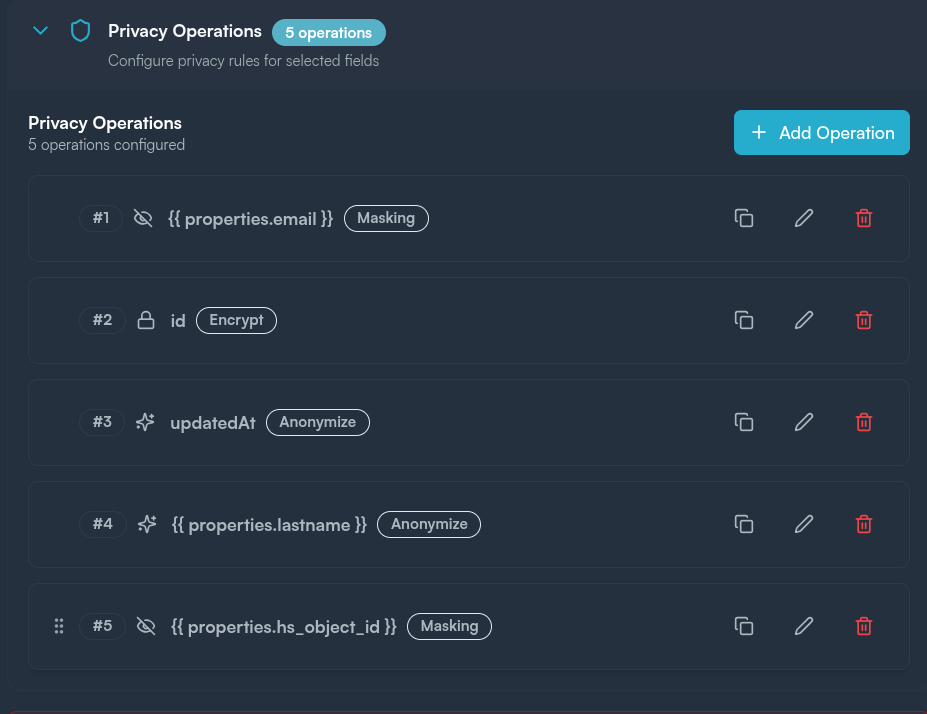
No separate API calls. No managing three different privacy vendors. No wondering if "Sarah Chen" became the same fake person everywhere.
It's privacy at agent speed—because when your AI is making decisions in milliseconds, protection can't add seconds.
Do This Tomorrow
- Pick one workflow. Find where the same PII appears in 3 different places. Is it protected the same way everywhere? Should it be?
- Check your logs. Are you masking before logging or hoping nobody looks?
- Test consistency. Anonymize 'john@example.com' three times. Same fake email? If not, you have a problem.
Take the Next Step
Ready to see FlowGenX in action? via URL: https://www.flowgenx.ai/request-demo OR By clicking "Request Demo" Button on top of this page and discover how our intelligent automation platform can help your team cut response times, boost ROI, and deliver next-level customer experiences.
Building production agents? Try our sandbox—configure different privacy methods, see entity consistency in action, test on your own data.
Join the conversation with your LinkedIn or Google account