

In today’s fast-paced world, businesses receive tons of requests, questions, and data every day. How can companies make sure each request goes to the right team quickly? And how do they find related documents or customer information even if the words don’t exactly match?
The answer lies in a smart technology called vector search. Although it sounds complicated, the idea is simple: it helps computers understand the meaning behind words and match things based on their sense, not just exact words.

Understanding the Problem
Traditional systems look for keywords to decide how to handle requests or find matching information. But people describe problems in many different ways. For example, someone might say:
- “I can’t pay my bill”
- “My invoice didn’t come through”
- “Payment issues with my account”
While the words differ, the problem is the same. Keyword searching might miss these similarities, causing delays or wrong routing.
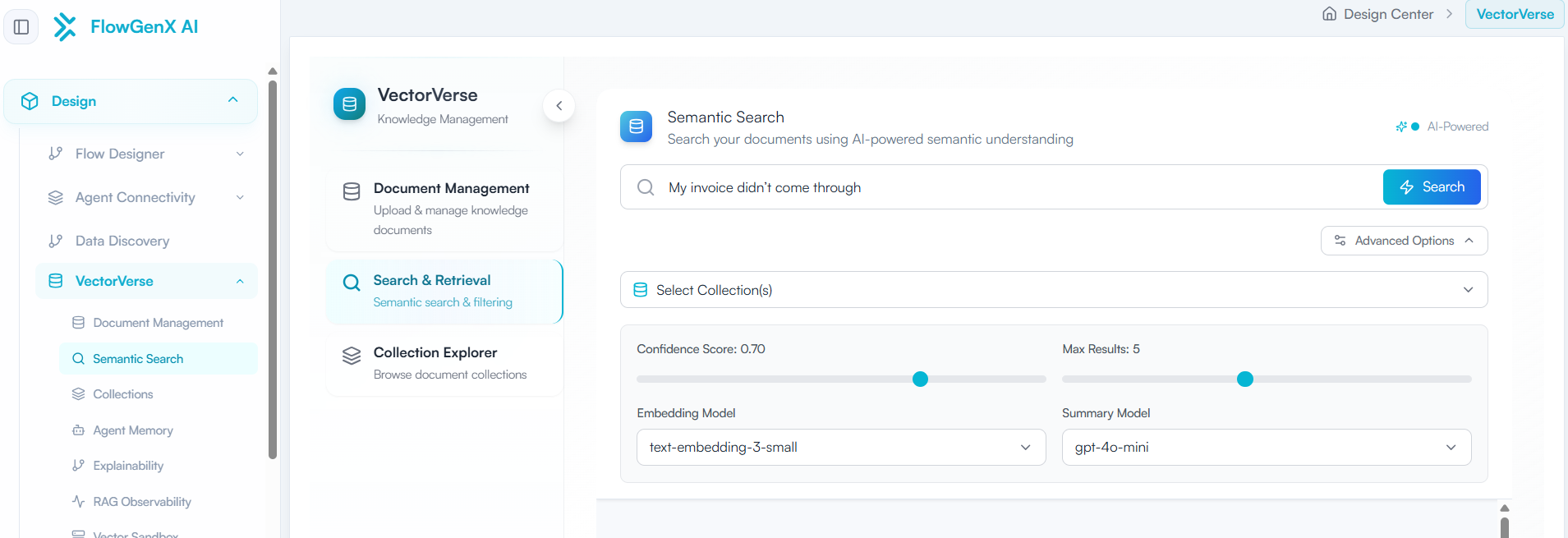
While the words differ, the problem is the same. Keyword searching alone might miss these similarities—leading to delays, misrouted requests, and frustrated customers.
What Is Vector Search?
Vector search changes the game by turning words and sentences into ‘vectors’ — think of them as a special kind of number code representing the meaning behind the text. The computer then compares these codes to find what’s closest in meaning.
So instead of matching “invoice” exactly, it finds all phrases that mean the same or very similar things, even if the words are different.
How This Helps Workflows?
Imagine a customer support system where every request is "understood" by the machine. When a new question comes in, the system quickly finds the right team—billing, technical support, or sales—based on what the customer really means, not just the words they use.
This is called smart workflow routing.
How It Matches Data?
Vector search also helps in data matching: finding records or documents that are related even if their details don’t exactly match. For businesses, this means:
- Spotting duplicate customer records even if names are spelled differently.
- Finding articles or help documents most relevant to a question, no matter how it’s asked.
- Linking related products or services that might use varied descriptions.
How FlowGenX Solves This?
FlowGenX takes a smarter approach. Its intent-understanding AI agents interpret the meaning behind every message rather than focusing on exact words. The platform identifies that all these examples point to the same core issue and automatically routes, classifies, and resolves them with precision.
The result is faster response times, higher accuracy, and a better experience for both customers and support teams.
Real Business Impact
Enterprises using FlowGenX achieve more than improved automation—they see real efficiency gains. The platform reduces manual effort, minimizes handoffs, and accelerates resolution speed. These improvements directly drive ROI by lowering operational costs and increasing customer satisfaction.
Why It Matters?
Companies that use vector search in their workflows get these benefits:
- Faster response times
- Fewer misrouted requests and frustrated customers
- Better organization of data and information
- Smarter, more adaptable systems that learn and improve over time
In Summary
Vector search is a cutting-edge way to help computers “understand” language better. By focusing on meaning instead of exact words, it powers smarter business workflows and makes data matching more accurate—leading to happier customers and more efficient operations.
If your company deals with lots of customer questions, documents, or records, exploring vector search technology can be a game changer in how you handle and organize work.
Take the Next Step
Ready to see FlowGenX in action? Click on Request a Demo on top of this page and discover how our intelligent automation platform can help your team cut response times, boost ROI, and deliver next-level customer experiences.

Join the conversation with your LinkedIn or Google account