
Topic: Enterprise Modernization & Agentic AI
In today’s boardroom, the conversation is obsessed with digital transformation, AI adoption, and shipping faster than the market. But beneath nearly every strategic initiative sits a quiet structural anchor dragging progress to a crawl: integration debt.
This isn’t just an IT nuisance. Integration debt is a business bottleneck that hits your P&L in very real ways. It shows up when product launches slip because legacy systems can’t talk to modern apps. It shows up when your best engineers spend their time patching brittle connections instead of building what’s next. And it shows up when a “quick pivot” turns into a multi-year migration.
For years, we’ve invested in integration platforms—iPaaS, ESBs, and API gateways—to standardize connectivity. That investment paid off. But as the application landscape explodes and workflows become real-time, a new class of problems has emerged: it’s no longer just about connecting systems—it’s about driving outcomes across them.
That’s where FlowGenX’s Agentic AI Platform comes in.
The Integration Debt Crisis: A Silent P&L Killer
To understand why transformation stalls, you have to look at the invisible web of dependencies across the enterprise. Integration debt is the accumulation of fragile point-to-point connections, legacy mappings, custom scripts, and “just-for-now” interfaces built over years of quick fixes.
The business impact is massive. In many organizations, a huge chunk of IT spend goes to simply "keeping the lights on" across a fragmented landscape—leaving zero bandwidth for real innovation. When teams are constantly firefighting brittle dependencies, modernization initiatives—like cloud migration or microservices adoption—grind to a halt.
iPaaS is Awesome for Classic Integration. FlowGenX is Built for What’s Next.
Look, we love iPaaS. It’s the backbone behind the integrations enterprises depend on, and it will keep running critical workloads for a long time.
But the next wave isn’t “more flows.” It’s agentic automation: systems that can take intent, reason through context, coordinate multiple tools, and drive outcomes—reliably and safely.
That’s what FlowGenX is built for.
If you’re building modern workflows—AI-assisted operations, multi-agent orchestration, tool-based execution across SaaS/ERP/ITSM, or natural-language-to-workflow—FlowGenX is the platform that fits by design.
The FlowGenX Difference: Orchestrated Coexistence & The Agentic Engine
FlowGenX introduces an Agentic AI layer that sits above your stack—your APIs, SaaS apps, data platforms, and existing integration estate. The goal isn’t to force a rewrite; it’s to provide a modern orchestration layer where business intent is separated from implementation details.
We call this approach Orchestrated Coexistence.
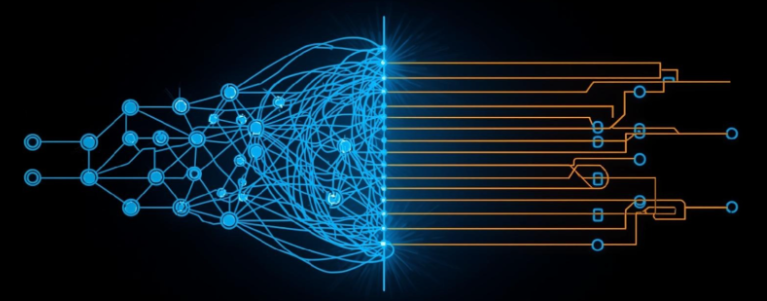
FlowGenX agents don’t require you to rip and replace your Zendesk, HubSpot, SAP, or legacy connectors. Instead, we treat your existing infrastructure as callable building blocks, while our engine provides the intelligence, reasoning, and dynamic execution. We didn’t just build another integration tool; we built a neural network for your enterprise.
Here is the technical unlock that makes this possible:
- Native Model Context Protocol (MCP) Support: We treat context as a first-class citizen. By adopting MCP, FlowGenX agents don't just "read" data; they understand the semantic context of your resources—whether it's a Notion doc, a Postgres database, or a Slack thread—without custom, brittle glue code. It’s a "build once, use everywhere" standard for your AI tools.
- The Agent-to-Agent (A2A) Protocol: The future isn't one giant AI model doing everything; it’s specialized intelligence. FlowGenX enables Swarm Intelligence, where a "Sales Agent" can autonomously contract a task to a "Legal Compliance Agent" and hand off the results to a "Fulfillment Agent." Our A2A protocol handles the negotiation, context passing, and error handling, turning isolated bots into a cohesive workforce.
- Any-to-Any Integration Grid: We abstract the transport layer entirely. It doesn’t matter if your stack is SOAP, gRPC, REST, GraphQL, or flat files on an FTP server. FlowGenX provides the universal translation layer that allows modern AI agents to interact with 30-year-old mainframes as easily as they interact with the latest OpenAI API.
This is the fundamental shift: teams can move fast without adding brittle logic into the integration layer. You keep your systems of record; we give them a brain.
How FlowGenX AI Solves Integration Debt
FlowGenX leverages Agentic AI to unwind integration debt through four mechanisms:
1) Intelligent Orchestration and Planning
At the core of FlowGenX is an agent’s ability to reason over goals. When a request comes in—like "Process a warranty claim for a customer in EMEA"—the agent decomposes the objective into a multi-step workflow. It plans the path: pull customer tier, validate eligibility, check ERP, trigger logistics. It orchestrates across disparate systems—even if those systems are stitched together via different vendors or legacy scripts.
2) Tool-Based Execution Model
In FlowGenX, everything is a tool: an API endpoint, a workflow, a SQL query, a webhook, or an MCP tool. This is transformative. You stop hard-coding business logic into fragile point-to-point integrations. Instead, you create reusable tools and let the agent orchestrate at a higher layer—where complexity is managed dynamically and evolved safely.
3) Self-Healing and Adaptive Monitoring
Integration debt is fragility. One small API change usually breaks a critical workflow. FlowGenX agents monitor execution in real time. If a call fails (timeouts, schema drift), the agent attempts alternate paths, retries with context-aware strategies, or escalates with a full diagnosis. This reduces MTTR and pulls teams out of firefighting mode.
4) Gradual Debt Reduction (Strangler Pattern)
Modernization shouldn't be a “big bang” rewrite. Because FlowGenX sits above the stack, it enables a strangler-pattern approach: deliver new automation immediately, while agents generate telemetry on which integrations are brittle or expensive. This lets you modernize surgically—retiring the worst offenders over time—without betting the business on a risky migration.
Real-World Impact: Turning Agility into Currency
This isn’t theoretical. Agentic AI is already bypassing integration bottlenecks to deliver outcomes:
- Unified Services in Telecom: Agents automate HR and IT service delivery across fragmented systems, enabling complex tasks via natural language—while legacy systems run quietly underneath.
- Cross-Domain Agility in Fintech: Firms deploy agentic assistants across IT, finance, and support without ripping out mainframes or ESBs. Agents bridge the gap while systems of record remain intact.
- SecOps Automation: Agentic AI coordinates enrichment and response across SIEM and identity systems—creating a cohesive operational view even when tools are connected via older connectors.
From Lock-In to Strategic Freedom
For the C-suite, adopting FlowGenX shifts the organization from being held hostage by historical IT decisions to actively shaping what comes next.
The ROI of killing integration debt is clear:
- Restored Agility: Launch and evolve workflows faster by composing intent-driven automations rather than waiting months for plumbing.
- Cost Reduction: Stop wasting spend on brittle maintenance; redirect it to product innovation.
- Future Flexibility: By lifting business logic into the agentic layer, underlying connections become replaceable—giving you leverage as vendors and platforms evolve.
"FlowGenX AI does not magically erase integration debt overnight, but it stops the bleeding immediately and provides a solvent path to pay down the principal while you continue to grow."
Conclusion: The Executive Decision
Integration debt is a choice. Continuing to patch legacy complexity with more point-to-point logic is a choice to remain constrained.
Adopting FlowGenX AI is a choice to build modern, agentic automation that decouples business strategy from technical limitations—so your enterprise can move at the speed of the market.
In a world where speed is a durable advantage, you can’t afford to have critical data trapped in silos. FlowGenX turns integration from a liability into a strategic asset—by making your stack programmable through intelligence, not just wiring.
Turn Integration Debt into Competitive Advantage.
Evaluate your integration landscape. Identify your highest-cost connectors and your slowest change cycles—and discover how FlowGenX AI can restore enterprise agility.

Join the conversation with your LinkedIn or Google account